
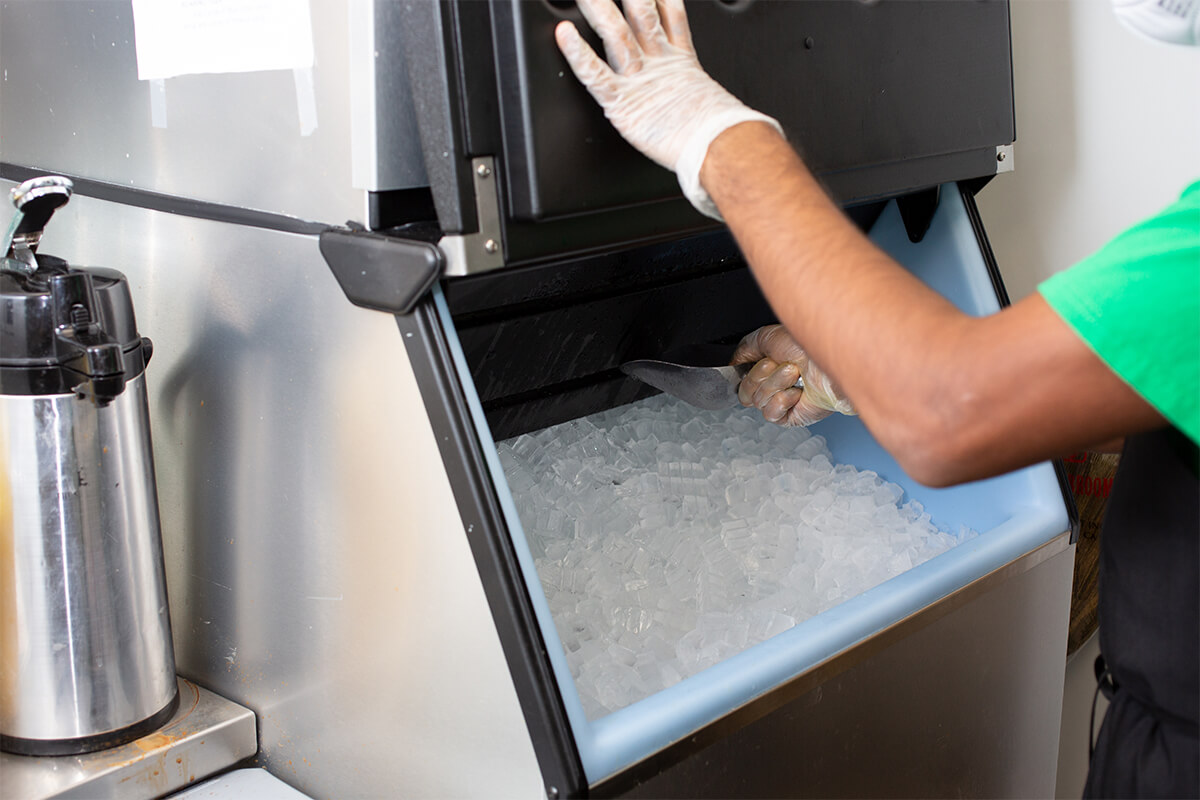
Ice seems simple enough. Water goes into a machine, the machine freezes it, and a few hours later there’s a bin full of ice ready for customers. But in a busy restaurant, café, hotel, or catering operation, the process is a little more complicated than that.
The quality of the incoming water can influence how an ice machine operates, how often it needs cleaning, and even how the finished ice tastes and looks. Since ice is consumed directly, small differences can become surprisingly noticeable. Nobody wants a customer asking why their drink tastes strange or why the ice looks cloudy.
That’s why water management deserves a place in the conversation when businesses are trying to maintain reliable ice production.
What Happens Inside a Commercial Ice Machine
A commercial ice machine repeatedly fills, freezes, harvests, and refills. This cycle happens again and again throughout the working day, so the machine is constantly interacting with the incoming water.
Water naturally contains dissolved substances. Depending on the source, these may include minerals, disinfectants, sediment, and other compounds. Some are harmless at normal levels, while others can affect equipment performance or the sensory quality of ice.
The important point is that clear water isn’t necessarily problem-free water. You can’t always see what’s affecting a machine from the outside.
Why Minerals Can Create Problems
Hard water is a common concern for commercial ice equipment. Calcium and magnesium can leave deposits when water repeatedly moves through heating, cooling, and freezing processes.
Over time, mineral deposits may collect on internal components and surfaces. This can increase cleaning requirements and potentially interfere with normal operation.
For a busy business, even a small maintenance issue can become inconvenient. If an ice machine needs extra cleaning every few weeks, staff time is being spent on something that could perhaps have been better managed from the start.
Water testing can help determine whether hardness or other mineral content is significant enough to require treatment.
The Connection Between Water and Ice Quality
When customers order a cold drink, they expect the ice to be clean, fresh, and neutral in taste. Ice quality is therefore more important than it might initially seem.
Water characteristics can influence taste, odor, clarity, and the appearance of finished ice. Certain substances that are noticeable in drinking water may remain noticeable after freezing.
This doesn’t mean every unusual-looking ice cube is automatically caused by poor water. Machine cleanliness, freezing conditions, storage, and other factors can play a role too.
Still, starting with good-quality incoming water gives the ice machine a better foundation.
How Filtration Can Help
Water filtration is often used to reduce specific substances before water reaches the ice machine. The appropriate filter depends on what’s actually present in the supply.
For example, sediment filtration can capture suspended particles, while carbon filtration may help address certain taste and odor concerns. Some commercial setups may also use additional treatment for hardness or other specific water characteristics.
There is no universal filter that removes everything. That’s why testing the water before choosing equipment is such a practical step.
A filter should also match the ice machine’s flow requirements and the manufacturer’s specifications. A technically good filter can still be a poor choice if it isn’t designed for the application.
Protecting Machine Performance
A commercial ice machine is an investment, and businesses expect it to work reliably. Machine performance can be affected by several things, including water quality, cleaning routines, temperature, airflow, and mechanical condition.
Water-related issues are only one piece of the puzzle, but they’re an important one.
Mineral scale may interfere with components. Sediment can collect in certain areas. Unpleasant water characteristics can affect the finished product. None of these problems should automatically be blamed on the water, but they are worth investigating when an ice machine isn’t behaving normally.
Regular Cleaning Still Matters
Even excellent water filtration doesn’t eliminate the need for cleaning and sanitizing. Ice machines operate in environments where moisture, temperature changes, and regular handling can create their own maintenance challenges.
Businesses should follow the manufacturer’s cleaning instructions and applicable food-safety requirements. Filters should also be replaced according to their capacity and recommended schedule.
Waiting until the machine obviously looks dirty isn’t a good maintenance strategy. By then, buildup may already have occurred internally.
A simple maintenance log can help staff keep track of filter changes, cleaning dates, inspections, and unusual observations.
Choosing the Right Filtration System
The best filtration system isn’t necessarily the most expensive one. It should be selected based on the actual water conditions and the requirements of the ice machine.
Before making a purchase, businesses should consider water hardness, sediment levels, taste and odor concerns, flow rate, filter capacity, replacement costs, and installation requirements.
It’s also worth checking the ice machine manufacturer’s recommendations. Some manufacturers specify particular filtration requirements or compatible systems.
A properly matched filter can be much more useful than a system loaded with features that don’t address the property’s real concerns.
Why Water Testing Is Worth the Effort
Water testing provides a clearer starting point. Instead of guessing why an ice machine is producing cloudy ice or developing scale, a business can examine the water itself.
Testing may reveal hardness, dissolved solids, sediment, disinfectants, pH, and other characteristics. Not every result requires treatment, and that’s an important distinction.
The goal isn’t to remove everything from water. It’s to understand the water well enough to decide whether treatment is actually necessary.
A Better Approach to Commercial Ice Production
Reliable ice production comes from more than simply buying a powerful machine. Water quality, filtration, cleaning, maintenance, and proper installation all work together.
For businesses that serve large quantities of ice every day, paying attention to the water can prevent small concerns from becoming recurring headaches. It can also help staff maintain more consistent equipment and reduce avoidable maintenance.
In the end, good ice starts with good habits. Test the water, choose filtration based on real conditions, maintain the machine properly, and don’t ignore small changes in ice appearance or taste.
The goal isn’t complicated technology for its own sake. It’s dependable ice that looks good, tastes clean, and keeps coming out of the machine when the business needs it.