
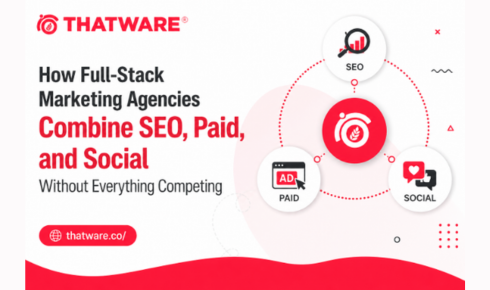
The integrated marketing agency pitch sounds compelling in theory. One team, one strategy, all channels working together. The reality, in many agencies that describe themselves as full-stack, is that the channels are managed by separate specialists who rarely talk to each other except in quarterly strategy reviews.
SEO is building topical authority around a set of keywords. Paid search is bidding on overlapping terms with different creative and landing page experiences. Social is producing content for engagement rather than search intent. Each channel is optimized for its own metrics, reporting into its own dashboard, and making decisions that are sometimes directly counterproductive to what the other channels are trying to achieve.
The result feels coordinated in the pitch deck and feels siloed in the daily operation.
Full-stack integration that actually works looks very different from the typical agency model, and understanding the difference helps brands evaluate whether a claimed full-stack capability is genuine or organizational convenience rebranded as strategy.
Where Genuine Channel Integration Produces Outsized Returns
The places where integrating SEO, paid, and social creates returns that no channel alone can achieve are specific and worth understanding clearly.
Paid search data informing organic content strategy is one of the most consistently underutilized integration opportunities. Paid campaigns generate conversion data at the keyword level that organic programs rarely have: which queries produce conversions, not just traffic. This data, when shared across channel teams, allows organic content investment to be prioritized toward the search intent patterns that paid data has confirmed convert well. Organic content can then displace expensive paid traffic over time as it builds ranking authority for commercially validated queries.
Organic ranking data informing paid bidding strategy works in the reverse direction. When organic rankings are strong for specific terms, paid bidding on those same terms produces redundant visibility at additional cost. Reallocating paid spend away from terms where organic already dominates toward terms where organic is weak produces better overall return from the total search budget.
Social amplification of SEO content accelerates the authority-building timeline. Content that would slowly accumulate organic reach through search can reach a much larger audience quickly through paid social amplification, generating the engagement signals, shares, and links that accelerate organic authority building.
Full stack marketing agency teams that have built genuine channel integration workflows exploit these intersections systematically rather than accidentally.
The Measurement Integration Challenge
The reason most agencies don’t achieve genuine integration is that their measurement systems don’t support it. SEO is measured in organic sessions and keyword rankings. Paid search is measured in ROAS and cost per conversion. Social is measured in engagement rate and reach.
When each channel is measured independently, each channel optimizes independently. The organic team doesn’t get credit for conversions that came through a paid touch that followed an organic session. The paid team doesn’t get credit for assisting brand searches that followed a social impression. The social team doesn’t get credit for driving direct traffic that’s attributed to a direct channel.
Building measurement that traces customer journeys across channel touchpoints, and attributes value to the full path rather than just the converting touchpoint, changes the optimization behavior of all channel teams simultaneously. It creates shared incentive to make the overall customer journey better rather than each team optimizing its own attribution independently.
This measurement infrastructure is genuinely difficult to build properly, which is why most agencies claim integration without achieving it. The organizations that have built it produce measurably better full-funnel performance.
Content Strategy That Works Across Channels
The content challenge in full-stack marketing is that content optimized for each channel separately often doesn’t serve any channel particularly well. Content optimized for social engagement is often too shallow to build SEO authority. Content optimized for SEO ranking is often too long and considered to perform well in social feed formats. Content optimized for paid landing page conversion is often too focused and stripped-down to rank organically.
The solution that genuinely integrated teams have developed is a core content strategy that produces content at different depth levels for different channel uses. A comprehensive SEO-optimized article serves as the content anchor. Social-optimized extracts, pull quotes, visuals, and short-form versions are derived from it for distribution. Paid landing page versions focus on the conversion-relevant information while linking to the full SEO content for users who want more depth.
Digital marketing services delivered through a genuinely integrated team produces this kind of content architecture rather than separate content programs for each channel that happen to be invoiced together.
Finding Genuinely Integrated Agencies
The evaluation question that separates genuine from performative integration is asking about specific cases where one channel’s data or performance changed the strategy of another channel. Not the theory of how they’d do it. Specific examples.
An agency that can describe a specific situation where paid search conversion data changed their organic content prioritization for a client, with specific outcomes, is demonstrating integration in practice. An agency that describes their integrated approach process without specific examples is describing an aspiration.
Ask what tools and processes they use to share data across channel teams. The answer should be specific. Shared dashboards, defined data transfer workflows, regular cross-channel strategy reviews with specific decision-making outputs. Vague answers about collaboration culture rather than specific process answers suggest the integration is more organizational than operational.
Also worth asking: do the SEO, paid, and social specialists on your account have individual specialties or do they each manage all channels? Genuine specialists produce better individual channel outcomes. Genuine integration requires specialists to share data and coordinate, not generalists doing everything. The answer to this question reveals whether the agency has resolved this tension with a real operational model or just hasn’t thought it through.