How SNL’s Evolution Found Its Ultimate Home on Peacock
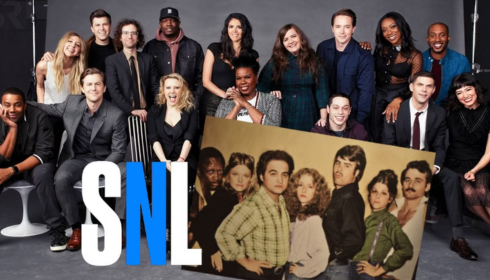
For nearly five decades, Saturday Night Live has been more than a television show; it’s been a cultural seismograph, a comedy boot camp, and an American institution. Its journey from the flickering cathode-ray tubes of 1975 to the on-demand libraries of the streaming era is a story of adaptation, survival, and legacy. Today, that journey has culminated in a fascinating, if complex, new phase: its official home on Peacock. This move is not merely a change of channel, but a symbolic and practical translation of the SNL ethos into the digital age, fundamentally altering how we access, understand, and engage with its history and its future.
You May Also Like- Peacock : Start Streaming Today with This Simple Login Guide Visit : Peacocktv.com/tv
The Foundational Blueprint: Live from New York, It’s Appointment Television
To understand the significance of the Peacock era, one must first appreciate the original, fragile magic of SNL. Conceived by Lorne Michaels as a rebellious, rock-and-roll answer to the staid variety show, its core tenets were immediacy and ephemerality. It was “live,” a high-wire act where anything could happen—from flubbed lines to historic breakthroughs. It was of “Saturday Night,” demanding you structure your weekend around it. This wasn’t just a broadcast; it was an event. The sketches were designed for that one airing, with the assumption they might vanish into the ether, discussed in school hallways on Monday but never seen again in their entirety. This model created legends. The chemistry of the original Not Ready for Prime-Time Players, the anarchic brilliance of the 80s with Eddie Murphy, the star-making turns of the 90s with Will Ferrell and Mike Myers, all lived and died by that weekly pulse.
This very model, however, also planted the seeds for its “Big Screen” destiny. SNL was, from its inception, a cinematic farm system. Its sketches were short films, its performers were actors playing heightened characters, and its filmmakers—from John Landis directing the “King Tut” short to Lonely Island’s digital shorts—treated the show as a cinematic playground. Breakout characters like The Blues Brothers, Wayne and Garth, and MacGruber didn’t just get laughs; they possessed full-blown narrative and commercial potential. The jump to the “Big Screen” became a rite of passage, a validation of an idea’s or a performer’s mass appeal. Some transitions were glorious (Wayne’s World), some were infamously troubled (It’s Pat), but they all proved that the energy and creativity bottled up in Studio 8H could power a feature film.
The Fracturing Landscape: Cable, the Internet, and the Scramble for Relevance
The 2000s and 2010s brought tectonic shifts that challenged SNL’s foundational “appointment TV” model. The rise of cable comedy (like The Daily Show and Chappelle’s Show), followed by the tsunami of the internet, fragmented the audience. Suddenly, you didn’t have to wait until Monday to discuss the show; clips were on YouTube and blogs hours after airing. The show adapted, leaning into “viral” moments—Andy Samberg’s Digital Shorts, Kate McKinnon’s Hillary Clinton, “More Cowbell.” The sketches were now designed for repeat viewing and social sharing. The “Big Screen” path also evolved, with alumni like Tina Fey, Amy Poehler, and Kristen Wiig becoming A-list stars and filmmakers, their SNL pedigree a badge of comic excellence.
Yet, this created a new problem: accessibility and context. New fans discovering “Dear Sister” or “Dick in a Box” on YouTube had no way to easily explore the rest of that episode, the season, or the cast’s evolution. The show’s vast history—over 900 episodes—was locked away in disparate, poorly curated archives or in expensive DVD sets. The legacy was atomized into memes, disconnected from the live, chaotic, time-capsule experience that created them.
Enter Peacock: The Archive as Attraction, The Show as Service
This is the void Peacock filled. When NBCUniversal launched its streaming service, it needed a flagship attraction, a library with undeniable cultural weight. SNL was the perfect candidate. Peacock didn’t just acquire a show; it acquired an ecosystem.
You May Also Like- Peacock : Start Streaming Today with This Simple Login Guide Visit : Peacocktv.com/tv
1. The Ultimate Time Machine: Peacock’s most revolutionary offering is the near-complete archive of seasons (with musical performances edited out for licensing reasons). This transforms SNL from a current event into a living, navigable museum. A fan can trace the evolution of political satire from Chevy Chase’s stumbling Gerald Ford to Dana Carvey’s George H.W. Bush, through Will Ferrell’s George W. Bush, and into the kaleidoscopic Trump impersonations of Alec Baldwin and others. They can follow the career arc of a Bill Hader, watching him evolve from a nervous featured player to the confident steward of Stefon. This archival access demystifies and deepens the lore. The “Big Screen” journeys of alumni are no longer mysterious leaps; they are logical progressions visible in the week-to-week honing of craft.
2. Curation and Context: Peacock goes beyond a simple episode dump. It creates collections around themes, hosts, and characters. You can binge every “Weekend Update” anchor desk from Chevy to Colin Jost, or every sketch featuring a beloved digital short. This curatorial function acts as a guide through the overwhelming volume of content, providing the context the internet stripped away. It frames SNL as a coherent, decades-long conversation with American culture, rather than a random generator of clips.
3. The New “Live” Experience: While Peacock is the antithesis of “appointment TV,” it cleverly preserves a version of the live event. New episodes drop on the service the next day, allowing for delayed but complete communal viewing. More importantly, Peacock has become an extension of the show itself, producing original companion content like behind-the-scenes documentaries, cast member retrospectives, and specials like The SNL Christmas Special. The service doesn’t just house SNL; it annotates and expands it.
4. The Two-Way Street of the “Big Screen”: The Peacock relationship has also begun to influence the “Big Screen” pipeline in new ways. First, the archive serves as a massive, constantly refreshed portfolio for alumni. Casting directors and studio executives can easily reference an actor’s entire body of work on the show. Second, Peacock has become a direct destination for SNL-adjacent films. Projects that might have struggled for a theatrical release, like the Supermarket Sweep remake or films featuring SNL sensibilities, now have a natural home. The line between “SNL sketch turned movie” and “Peacock Original with SNL stars” is blurring, creating a more integrated talent ecosystem.
Challenges and The Inherent Tension
This transition is not seamless. Peacock’s SNL is, by necessity, a edited history. The missing musical performances are a significant loss, removing a key component of the show’s identity as a music showcase. The curated, bingeable format can also sanitize the experience. Watching ten “Celebrity Jeopardy!” sketches in a row is hilarious, but it removes the surprise of encountering it live amidst weaker material. The chaos, the failed experiments, the palpable tension of a show finding its rhythm—elements intrinsic to the live experience—are flattened by the algorithm.
Furthermore, streaming metrics are a far cry from overnight Nielsen ratings. Success is now measured in completions, libraries, and subscriber retention, not a singular Saturday night share. This changes the economic and creative pressure on the show, perhaps incentivizing sketches designed for repeatability and shareability over pure, risky live innovation.
Conclusion: A Legacy Reassembled and Reimagined
The journey of SNL from its groundbreaking live origins to its curated life on Peacock is a microcosm of the media industry’s transformation. Peacock has performed a vital act of cultural preservation and re-contextualization. It has reassembled the fractured legacy, allowing us to see the threads connecting Gilda Radner’s Roseanne Roseannadanna to Melissa Villaseñor’s impressions, and Dan Aykroyd’s Bass-O-Matic to Pete Davidson’s Chad.
You May Also Like- Peacock : Start Streaming Today with This Simple Login Guide Visit : Peacocktv.com/tv
In doing so, Peacock has created a new kind of “Big Screen.” It’s not the silver screen of a cinema, but the myriad screens of our daily lives. It’s a vast, searchable, and endlessly entertaining panorama of American comedy. The “live” thrill of Saturday night remains the beating heart, but Peacock provides the memory, the annotated script, and the director’s commentary. It has transformed SNL from a weekly show into a continuous service, from a moment in time into a universe to explore. From SNL to the Big Screen was once a perilous leap; now, on Peacock, it’s a seamless, scrollable journey. The show must still be live, but its history—its soul—is now, finally, on demand.